
Service 05 · Studios
Fitness Studio and Boutique Gym Cleaning
Our fitness studio cleaning in Melbourne is built for rooms where skin, mats and shared props meet in every session: yoga and hot yoga, pilates and reformer, spin, boxing, martial arts and functional boxes. Visits are timed around your timetable and priced for the size of your studio, not a big-box gym. Studios are one of the fitness and gym cleaning services we run across the city.
- Cleaned by format
- Timed around your classes
- Priced for small operators
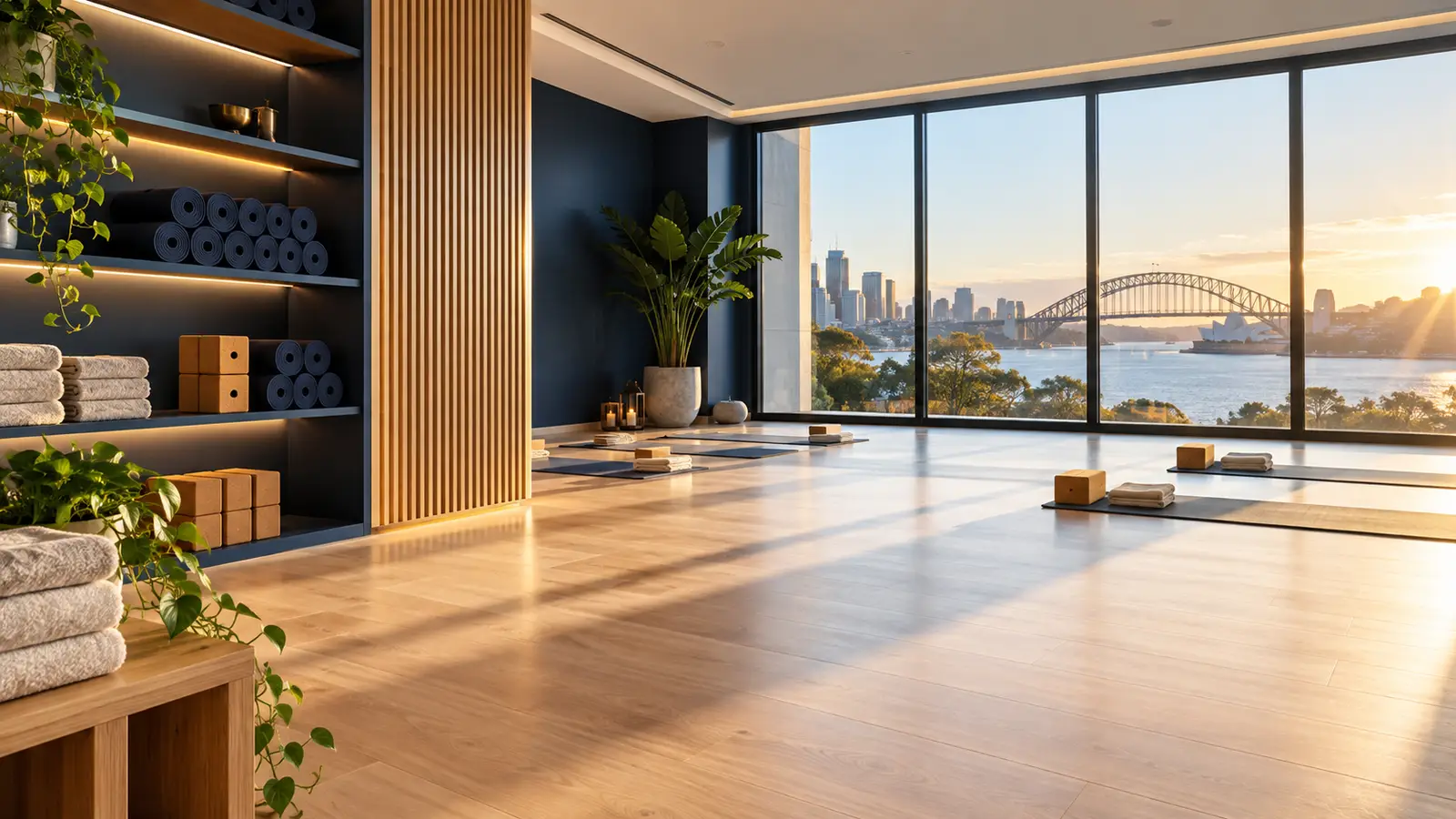
Why studios are harderMore skin contact per square metre than any other kind of gym, in rooms that rarely sit empty.
The studio problem
Why is fitness studio cleaning harder per square metre?
Fitness studio cleaning is harder per square metre because bodies are in direct contact with the floor, mats and props for most of every class, sessions run back to back, and small rooms trap heat and moisture. The result is more sweat and skin contact in less space.
| Format | Main concern | What gets extra attention | Typical rhythm |
|---|---|---|---|
| Yoga and hot yoga | Humidity, bare feet, mats | Floor, mat storage, walls and vents | Daily, plus mid-day turnaround in hot rooms |
| Pilates and reformer | Shared straps, bars, upholstery | Carriages, foot bars, loops, headrests | Daily |
| Functional boxes | Chalk, rigs, turf, dust | Rig bars, plates, turf lanes, platforms | Daily or on class days |
| Boxing and martial arts | Skin contact on mats | Mats and wall pads, with correct contact time | After each training day |
| Spin and cycle | Heavy sweat in a closed room | Bikes, floor under bikes, fans | Daily |
A big gym spreads its members across a large floor. A studio packs a class of twenty into a room a tenth of the size, then does it again forty minutes later. Many Melbourne studios also sit upstairs in older shopfronts along strips such as Glenferrie Road, Chapel Street and Sydney Road, with stair-only access and a single shared bathroom.
That changes how we work. Kit has to be carried up by hand, the bathroom has to be finished before the first class, and there is often no storeroom, so we bring everything in and take it all back out.
Yoga
How are yoga and hot yoga rooms cleaned?
Yoga rooms are cleaned for bare-foot contact: floors are damp-cleaned with a product suited to the surface, studio mats are washed on both sides, and props are wiped. Hot rooms add a humidity routine, with walls, vents and corners checked for mould every week.
Yoga studio cleaning is mostly about the floor, because faces, hands and feet all touch it. We use a gentle product that leaves no residue, since a slick film on timber or cork is a slipping risk in a balance pose.
Hot rooms, often heated to around 40 degrees, are a different job. Heat and humidity drive sweat into mats, carpet tiles and grout, and the room stays damp for hours after the last class. We open it up to dry, clean from the ceiling vents down, and look for early mould along skirting boards and in corners before it spreads.
Studio mats and blocks are cleaned and stood up to dry. Members' own mats stay theirs, but we are happy to suggest wording for a mat hygiene note on your booking app.
Pilates
What do pilates and reformer studios need?
Pilates studios need every reformer cleaned at each visit: carriage and headrest upholstery, shoulder rests, foot bar, straps and handles, with vinyl-safe products and no liquid on the rails or springs. Chairs, trapeze tables and small props get the same routine.
Reformer routine
- Vinyl-safe disinfectant on carriages, headrests and shoulder rests
- Straps and loops wiped or swapped for a clean set
- Foot bars and handles cleaned at every visit
- Floor around each reformer vacuumed and damp-cleaned
What we avoid
- Liquid on the rails, wheels or springs
- Harsh products that dry and crack upholstery
- Leaving leather or fabric straps damp
- Moving reformers without the studio's say-so
Pilates studio cleaning is detailed work. A ten-reformer room has dozens of contact points per machine, and clients notice a sticky strap straight away. Rails and springs are maintenance items: we keep product off them and tell you if anything looks worn or dry.
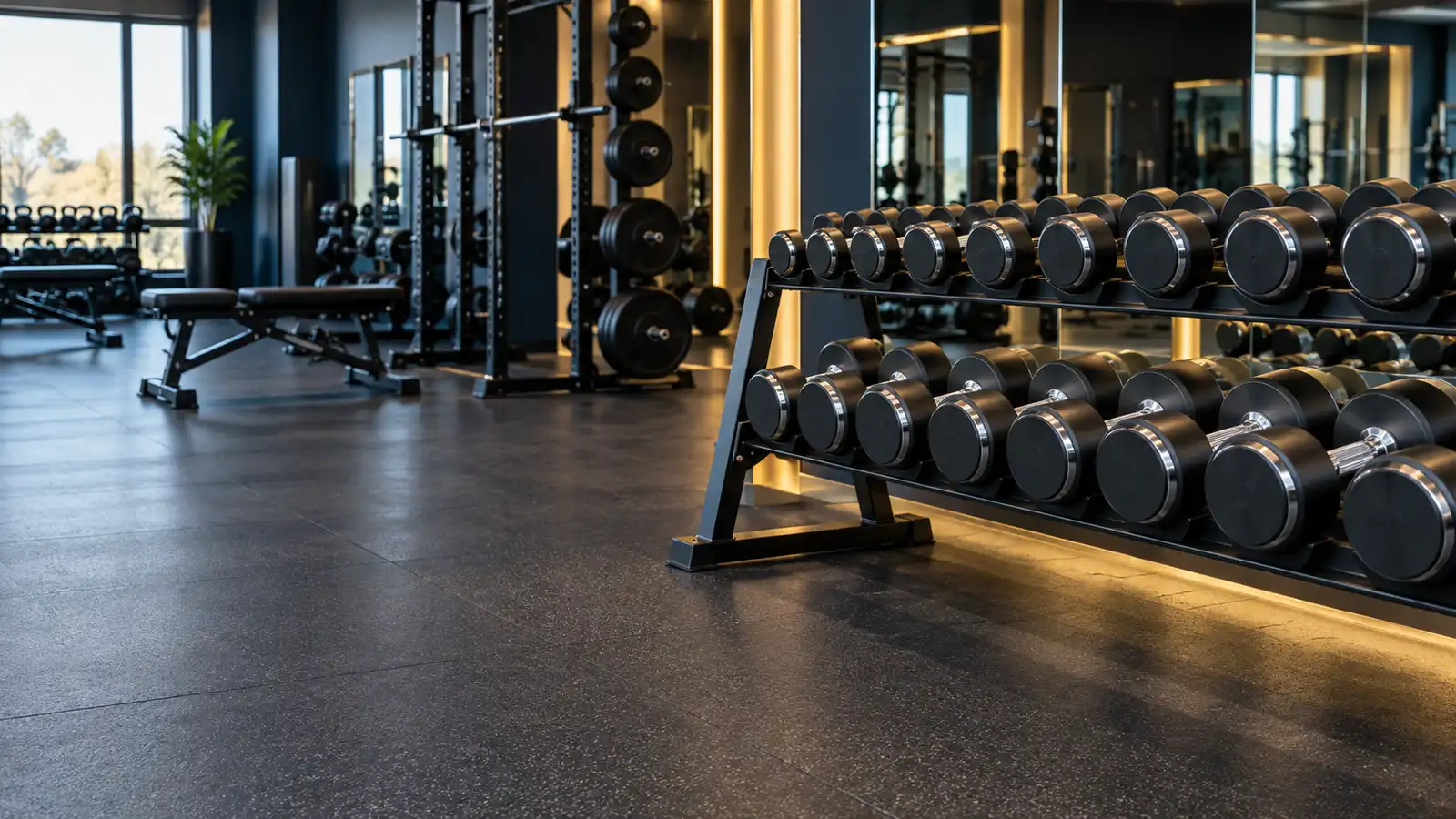
Where the dust goes
- Rig bars and pull-up stations
- Bumper plates and bar sleeves
- Rowers, ski machines and air bikes
- Turf lanes and sled tracks
- Roller door tracks and entry
- Chalk bowls and the floor beneath
Functional boxes
How are functional boxes cleaned: chalk, rigs and turf?
Functional boxes are cleaned for chalk and dust first: rigs, bars and plates are wiped, chalk is vacuumed with a fine filter rather than swept, turf lanes are brushed and vacuumed, and rubber floors are scrubbed to lift the paste that chalk and sweat leave behind.
Boxes, including CrossFit-style gyms, tend to run out of converted warehouses with roller doors, concrete slabs and very little storage. Street dust blows in whenever the door is up, and it mixes with chalk on every horizontal surface.
Rig bars are knurled like barbells, so they get a nylon brush as well as a wipe. Air bikes and rowers take heavy sweat on handles and seats.
The floor methods for rubber and turf are set out under our rubber and turf floor care.
Martial arts
How are martial arts mats kept hygienic?
Martial arts mats are cleaned after every training day with a mat-safe disinfectant, applied with a dedicated mop, left wet for its labelled contact time and then dried. Wall pads, mat seams and the edges where mats meet the wall get the same attention.
Grappling and striking put bare skin on the mat for an hour at a time. Tinea spreads through skin contact and shared floors and towels, as the Better Health Channel explains, and school sores spread the same way, so mat hygiene is the most important cleaning job in the room.
Martial arts mat cleaning has three rules. The mop is only ever used on the mats. The product stays wet for as long as its label says. And the mats dry fully before the next class, because a damp mat is a slippery mat.
Owners can back this up with simple house rules, such as clean gear, covered cuts and footwear off the mat, and we are happy to share what other clubs use.
Mat routine
- Dry dust and hair vacuumed first
- Mat-safe disinfectant with a mat-only mop
- Contact time from the label
- Seams, edges and wall pads included
- Dry before the next session
Sources, checked September 2026
Spin
What do spin and cycle studios need?
Spin studios need every bike cleaned at each visit, from handlebars, saddle and resistance knob to the frame where sweat drips, plus the floor underneath where it pools. Fans, speakers and the instructor podium are wiped, and the room is aired out after the last class.
Frames, not just handlebars
Sweat is salty, and left on a steel frame it starts to corrode paint and bolts. The whole bike is wiped, including the parts nobody touches.
Under the bikes
Sweat drips straight down, so the floor or mats under each bike need a proper clean, not a quick mop around the feet.
Air it out
A closed, dark room holds heat and smell. Fans are cleaned and the space is ventilated before the next morning's first ride.
Scheduling
How do cleaning programs fit around class schedules?
Studio programs are built around your timetable: the main clean happens after the last class or before the first, and busy rooms can add a short turnaround in the midday gap. Nothing is scheduled over a class, and changes to your timetable move our visit with it.
When the first reformer session starts at six, the room has to be ready the evening before or by half past five at the latest. Late-evening yoga rooms are usually done after the final session and locked behind us.
Small studios often ask whether a contract is worth it. For most, a simple program of five or six visits a week, priced per visit, costs less than calling a cleaner in when things get bad, and it keeps reviews steady.
Program terms are explained under gym cleaning contracts, and the hygiene standard behind all of it is in our gym hygiene standards guide.

A class day at a busy studio Example
- 6:00amFirst class. Room was cleaned the night before
- 7:15amSecond class, 15-minute gap
- 12:00pmLunch class
- 1:00pmOptional turnaround: floor, props, bathroom
- 5:30pmEvening block, three classes back to back
- 8:30pmMain clean after the last class, room locked
Times are an example. Your visits follow your own timetable.
Quote
How do you quote a fitness studio?
Send your studio format, room size, number of bathrooms, class timetable and whether you want a midday turnaround. Most studios can be priced from those details and a few photos, with a written per-visit figure back within 24 hours.
- 1Format and sizeYoga, reformer, spin, boxing, martial arts or functional, and the rough floor area.
- 2Your timetableFirst and last class times, and any gaps you would like used.
- 3A studio-sized pricePer visit, with the format checklist written into the scope.
Studio pricing should reflect a studio. A two-room pilates business does not need, and should not pay for, a big-box gym checklist.
See how rates work on our gym cleaning costs in Melbourne page, read more about our wider gym cleaning Melbourne work, or get a quote for your studio.
FAQ
What do studio owners ask us?
Short answers to the questions studio operators ask most. The walk-through covers anything specific to your room.
Can you clean between classes?
Do you disinfect martial arts mats properly?
Is a small studio worth a contract?
Do you clean reformers?
How do you handle humidity in hot yoga rooms?
Your room, your timetable. A studio that is ready before the first class.
Tell us your format and class times. We will send a per-visit price sized to your studio, with the cleaning checklist for your format attached.