Service 01 · Floors
Gym Floor Cleaning by Surface Type
Our gym floor cleaning service matches the method to the surface, so rubber, sprung timber, turf and tile each get their own product, machine and drying routine. It is for owners and managers who have watched a floor turn grey, sticky or slippery under the wrong contractor and want it looked after properly. Floors are one part of our wider range of services for gyms.
- Product matched to the surface
- Machines sized for your fit-out
- Dry before members walk on it
The usual culpritA strong degreaser on rubber. It lifts dirt on day one and dries the surface out within weeks.
Surface finder
Which gym floor surfaces need different cleaning?
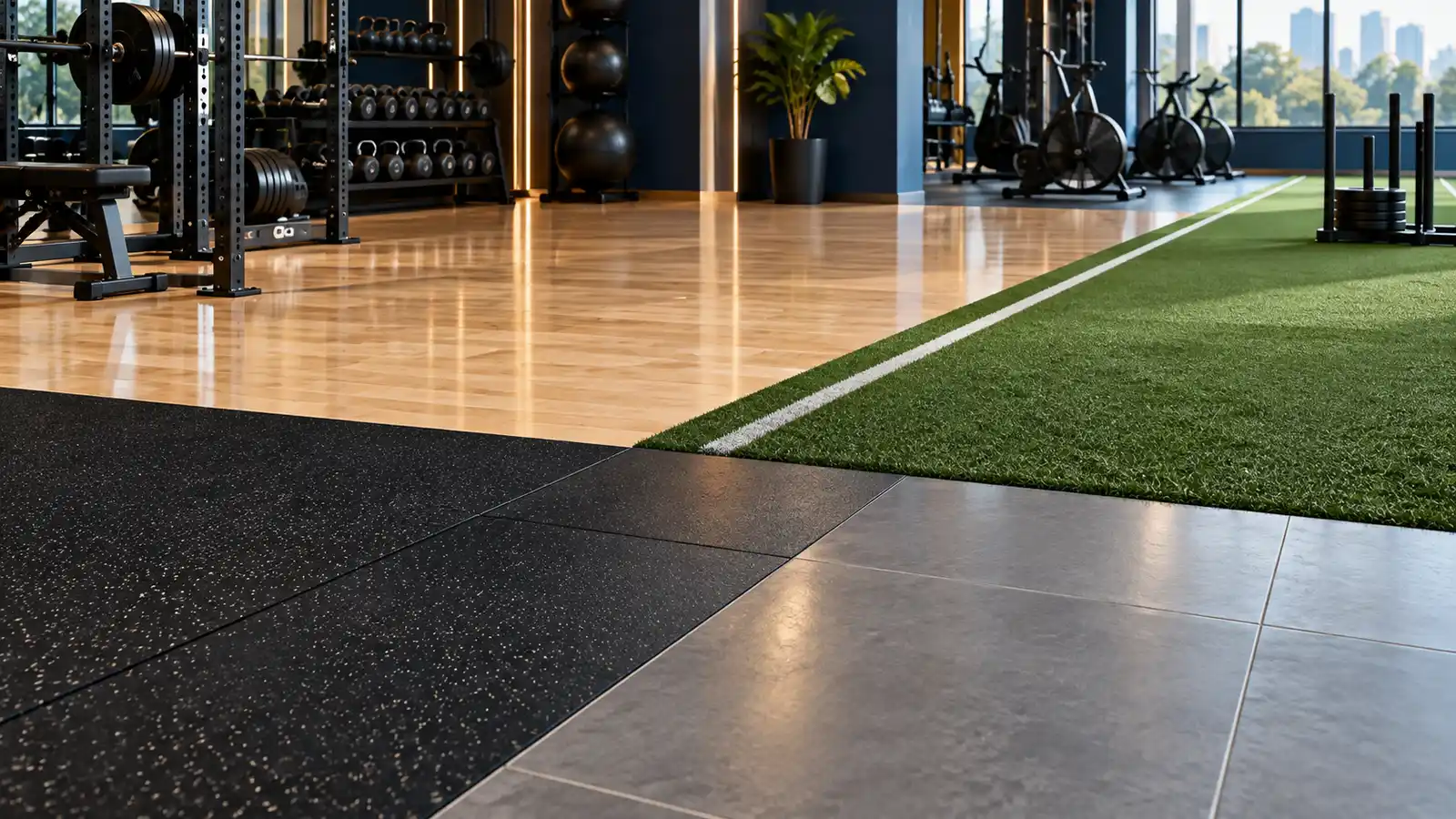
Most gyms run four surfaces that each need a different approach: rubber in the weights and functional areas, sprung timber in studios and courts, turf on sled and conditioning lanes, and tiles in wet areas. Gym floor cleaning works when each gets its own method.
| Surface | Where you find it | Product | Machine | Water | Warning sign |
|---|---|---|---|---|---|
| Rubber and vulcanised | Weights floor, functional zones, under racks | pH-neutral | Auto-scrubber or soft pad | Low, dried straight away | Chalky grey patches, slick film |
| Sprung timber | Studios, courts, group rooms | Coating maker's approved cleaner | Dust mop, damp microfibre | Minimal, never pooled | Dull lanes, coating lifting at joins |
| Turf | Sled lanes, conditioning strips | Mild, low residue | Brush vacuum, low-moisture extractor | Low | Flattened pile, sour smell |
| Tile and grout | Change rooms, showers, entries | Neutral daily, alkaline periodically | Scrubber or deck brush, wet vac | Wet, then squeegeed dry | Dark grout, greasy sheen |
Plenty of gyms also have a fifth or sixth surface: vinyl sheet in a studio, polished concrete in a warehouse box, carpet in an office or physio room. We note each one at the walk-through and treat it on its own terms, rather than running one mop across the whole building.
The rule underneath all of it is simple. Use the gentlest product that removes the soil, use only as much water as the surface can take, and never leave anything wet behind for a member to find.
Rubber
How should rubber and vulcanised gym flooring be cleaned?
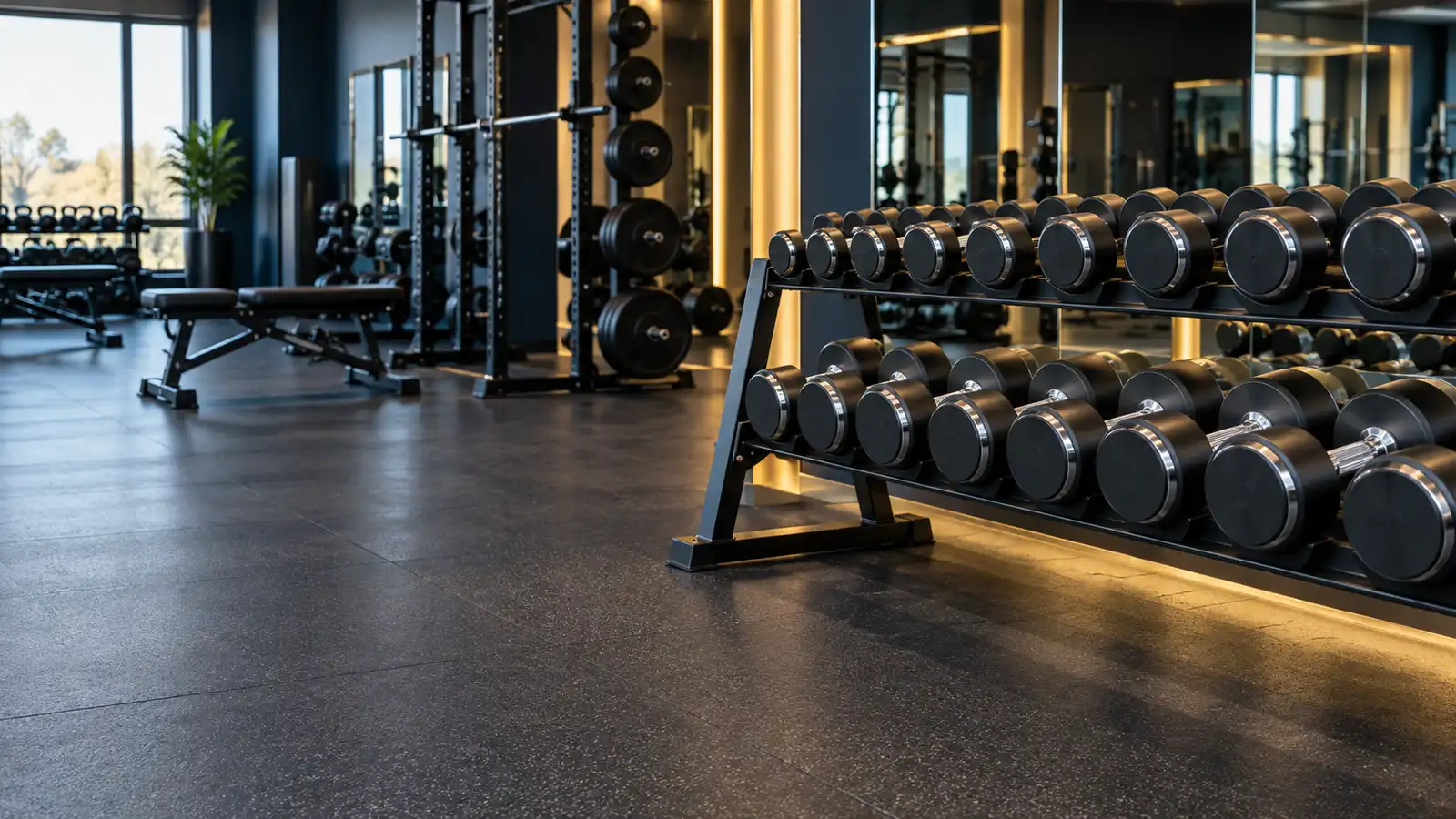
Rubber gym flooring should be vacuumed or dust-mopped first, scrubbed with a pH-neutral cleaner using a soft pad or brush, and dried straight away, because harsh degreasers, solvents and standing water all break the surface down.
Rubber shrugs off dropped weights and struggles with chemistry. Solvent and citrus cleaners soften the binder that holds recycled rubber together. High-alkaline degreasers strip the surface and leave it looking dusty grey even when it is clean. Bleach fades coloured flecks. Once that damage is done, no amount of cleaning brings the original finish back.
Interlocking tiles add a second weak point, the seams. Water pushed into the joins sits underneath, where it smells and can loosen tiles over time. An auto-scrubber that lays down and recovers solution in one pass, or a low-moisture method on small areas, keeps the joins dry. A flooded mop does the opposite.
New rubber also smells for its first few months, and some products develop a pale surface haze. Both are normal. We tell owners which marks are the floor and which are dirt, so nobody pays to clean something that is not a cleaning problem.
Rubber floor routine Every visit
- 01Dry soil off first. Grit, crumb and chalk are vacuumed before any water touches the floor.
- 02Scrub with pH-neutral solution, pad or brush pressure set for the tile you have.
- 03Recover the water in the same pass so seams stay dry.
- 04Walk the floor. Anything still damp is dried before members come back.
- 05Note wear, lifting edges or cracked tiles in the visit report.
Heavy chalk crust is scrubbed out on a slower machine setting during deep cleans.
Sprung timber
How do you clean sprung timber and courts without damage?
Sprung timber and court floors are dust-mopped every visit and given a lightly damp microfibre pass with the product approved by the coating maker. No steam, no flooding, and no generic floor cleaners that leave a film.
What timber needs
- Dust mop first so grit cannot scratch the coating
- Damp microfibre with minimal solution
- Use the coating maker's approved cleaner
- Lift scuffs and tape residue by hand
What ruins it
- Wet mops and buckets
- Steam cleaners of any kind
- Oil soaps and polishes that make courts slippery
- Multi-purpose sprays that leave residue
Timber in group rooms and courts carries a protective coating, and that coating is what you are really cleaning. Residue from the wrong product leaves a film that shoes slide on, which is a genuine safety issue in a class full of lunges and lateral work. Water left at a board join swells the timber, and the coating starts to lift from the edge.
Sanding and recoating are specialist flooring jobs, usually needed every year or two depending on traffic. We do not refinish floors. We keep the coating clean between recoats so it lasts, and we flag worn lanes early so you can plan and budget the work.
Grip is the other thing to listen for. On a clean, properly coated court, shoes squeak. When the squeak fades, the cause is usually dust or residue, and the right clean brings it back.
Turf
How are turf strips and sled tracks kept clean?
Turf strips and sled tracks are vacuumed with a brush head every visit, brushed so the pile stands back up, spot treated for sweat and spills, and extracted with low moisture every few months to lift what vacuuming leaves behind.
- Every visit
- Brush-head vacuum
- Weekly
- Pile brushed upright, spots treated
- Every few months
- Low-moisture extraction
- As needed
- Seams and edges checked
Indoor turf takes sled pushes, bear crawls and dropped kettlebells, so the pile flattens and traps rubber crumb, chalk and sweat. Left alone it fades from green to grey and starts to smell, especially along the start line where people stand around between sets.
Turf is a touch surface as well as a floor. People kneel, crawl and stretch on it, so sweat and skin contact never stop. Spot treatment along the start line and stretching corners is part of the weekly routine.
Too much water is the classic mistake. Turf backing holds moisture, and a lane that stays damp underneath smells worse after a clean than before it. Low-moisture extraction and airflow afterwards solve that. Fragranced carpet shampoos are the other trap, because the sticky residue pulls in more dirt.
Tiles and wet areas
What do tiles, grout and wet-area floors need?
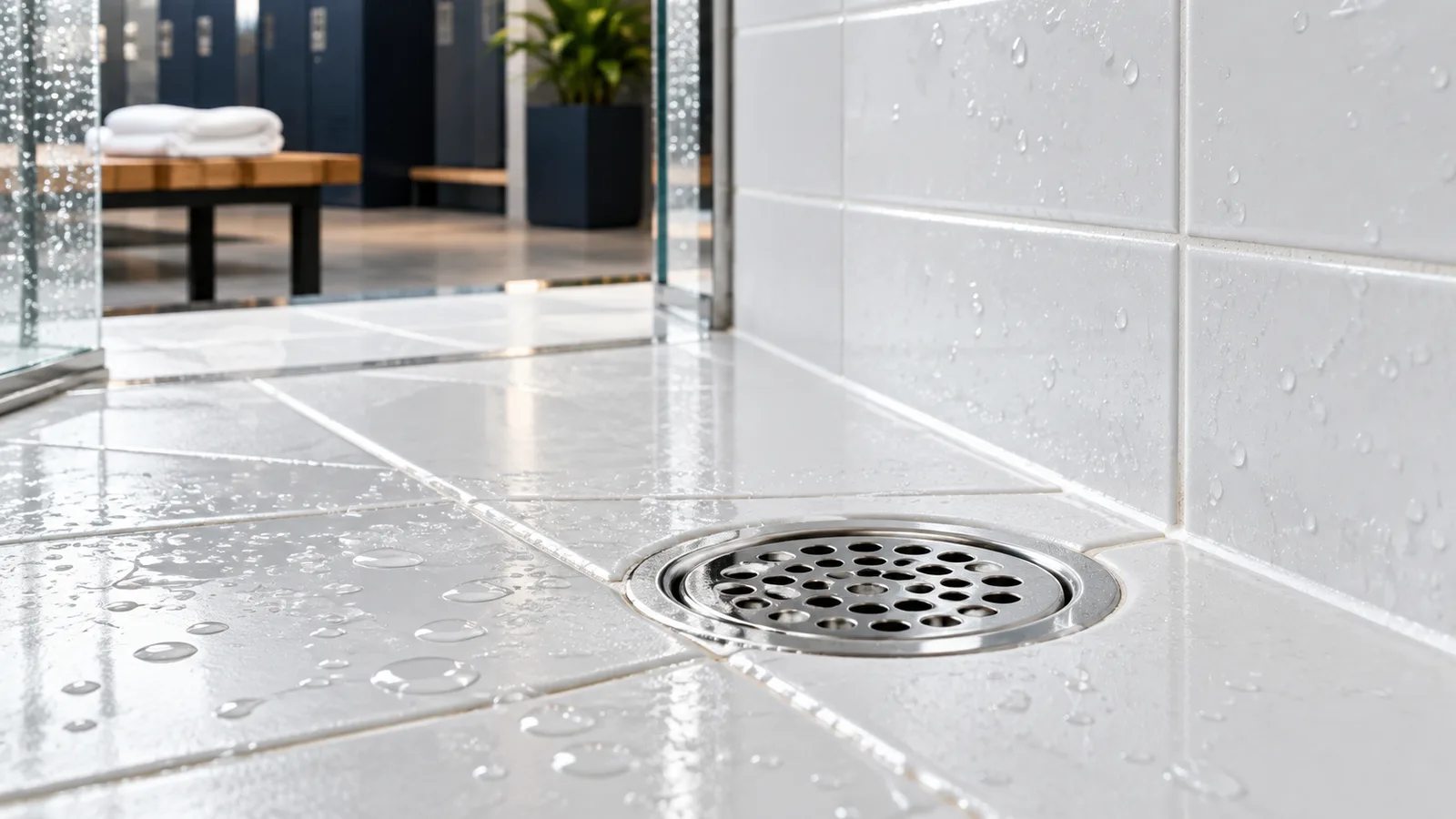
Tiled floors in change rooms and entries are cleaned wet with a neutral product every visit, scrubbed down to grout level on a regular cycle with an alkaline cleaner for body oils, and squeegeed dry so the surface keeps its grip.
Melbourne's tap water is soft, so the dull film on wet-area tiles is usually soap and body oil rather than limescale. It comes off with an alkaline cleaner and a scrub, not acid. Acid descalers used every day eat into cement-based grout and open it up to stains, so we keep them for genuine scale and use them sparingly.
Grip matters more here than anywhere else in the building. A clean tile with a soap film can be slicker than a dirty one, so rinsing and drying are part of the job, not extras. Entry tiles get the same care in winter, when wet shoes carry grit and water in from the street.
Showers, drains and the rest of the wet-area routine sit under our change room and shower cleaning service. Gym tile cleaning in entries and corridors is included in the floor scope.
Entry matting does more for your floors than any product we carry. A decent run of mat inside the door catches grit and water before it is ground into the rubber and timber further in. We vacuum mats on both sides, lift them so the floor underneath can dry, and tell you when a mat has stopped doing its job.
Chalk zones
How are chalk zones and lifting platforms handled?
Chalk is vacuumed with a fine-filter machine rather than swept, lifting platforms are damp-wiped and dried, and chalk bowls and rig bases get their own routine, so the dust stays in the lifting area instead of drifting across the gym.
Vacuum, never sweep
A broom throws chalk dust into the air, where it settles on consoles, mirrors and fans across the room. A fine-filter vacuum lifts it and holds onto it.
Wipe, then dry
Platforms with timber centres and rubber sides get a damp wipe with a neutral product and then a dry pass, because chalk and water together form a paste that sets in the rubber grain.
Contain the source
Chalk bowls, rig bases and the floor around them are cleaned first. We can also suggest where bowls and mats sit so the dust travels less far.
Strength gyms and functional boxes build up a crust in the rubber that nightly vacuuming cannot shift. That is when a scrub on a slower machine setting earns its place, usually as part of a quarterly deep clean.
Filters matter here too. A vacuum with a clogged or basic filter blows fine chalk straight back out of its exhaust, so machine filters are checked and changed on a schedule rather than when they finally fail.
Frequency
How often do gym floors need machine cleaning?
Busy gyms need a machine scrub on rubber every night, studios with timber floors need a damp clean after each day of classes, turf needs a weekly brush and periodic extraction, and wet-area tiles need scrubbing at every visit.
| Surface | 24-hour gym | Boutique studio | Health club | Quiet corporate gym |
|---|---|---|---|---|
| Rubber | Nightly scrub | Weekly scrub | Daily scrub | 2 to 3 times a week |
| Sprung timber | Damp clean daily | After each class day | Daily | Twice weekly |
| Turf | Vacuum nightly, extract quarterly | Vacuum each visit | Vacuum daily, extract quarterly | Vacuum weekly |
| Tile and wet areas | Every visit | Every visit | Every visit plus top-ups | Every visit |
Traffic decides more than floor type. A studio running five classes a day wears its floor faster than a quiet corporate gym twice its size. We set the first schedule from your class timetable or door-entry data, then adjust after a month once we can see how each surface is holding up. Season plays a part as well: Melbourne's winter brings the most rainy days, so entry zones and the first few metres of rubber often need extra passes from May to September.
For a zone-by-zone view that goes beyond floors, read how often a gym should be cleaned, or see how floor care fits into our gym cleaning work across Melbourne.
Warning signs
What does a badly cleaned gym floor look like?
A badly cleaned gym floor shows it within weeks: rubber turns grey and powdery, timber loses its grip or goes patchy, turf flattens and smells, and grout darkens. Each symptom points to a specific cause, which usually means it can be put right.
| Symptom | Likely cause | What fixes it |
|---|---|---|
| Grey, powdery rubber | High-alkaline degreaser or solvent residue | Neutral scrub and rinse. Deep damage may be permanent |
| Sticky or tacky rubber | Product left to dry on the surface, or too much of it | Rinse scrub with clean water, then the right dilution |
| Slippery timber | Oil soap, polish or multi-purpose spray residue | Residue removal with the approved cleaner |
| Coating lifting at board edges | Water left pooled at the joins | Stop wet mopping. A flooring contractor assesses the boards |
| Flat, grey turf lane | No brushing, crumb and chalk trapped in the pile | Brush, vacuum and low-moisture extraction |
| Sour smell from turf | Backing left damp after a wet clean | Extraction with airflow and far less water |
| Dark grout lines | Body oil and soap film left in the grout | Alkaline scrub at grout depth on a set cycle |
| Musty entry mats | Mats never lifted or dried underneath | Lift, vacuum both sides, dry, replace when worn |
Most of these trace back to one root cause: the product was chosen for the building, not for the floor. The fix starts with a change of method and a reset scrub, then a steady routine for a month while the surface settles.
Some damage will not fully reverse, especially rubber that has been stripped by strong chemicals for a long time. We say that before quoting rather than promising a floor that looks new.
Cost
What does gym floor cleaning cost?
Floor cleaning is priced by area, surface mix and frequency. A single rubber floor scrubbed nightly costs less per square metre than a mixed floor of timber, turf and tile, because every extra surface brings its own method and its own time.
When floor care is part of a daily program, it sits inside the per-visit rate rather than appearing as a separate charge. One-off floor restorations, such as a heavy chalk crust or a turf lane that has not been extracted in a year, are quoted as their own scope.
What we will not do is quote a floor we have not seen. Photos are enough for a small studio. For larger floors, a ten-minute walk tells us more than any drawing.
The condition of the floor changes the first price too. A floor cleaned with the wrong product for a year may need a reset scrub before a routine program makes sense, and that one-off cost is shown on its own line so the ongoing rate stays honest.
Rate structures and quote comparisons are explained on our gym cleaning service prices page.
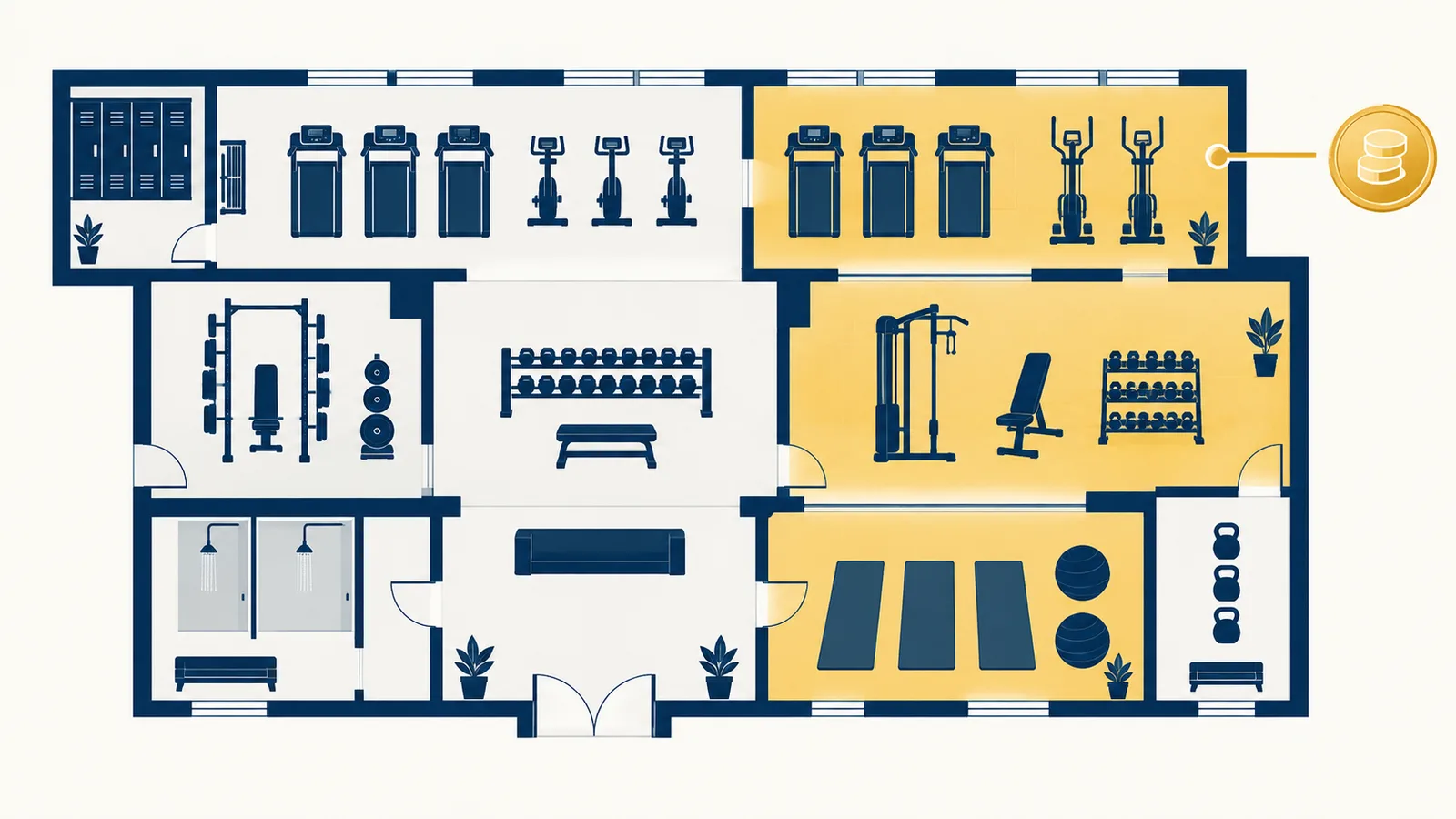
What changes the floor price
- Total floor area in square metres
- How many surface types, and where
- Visit frequency and the access window
- Chalk use and turf lanes
- Warranty terms that name approved products
Quote
How do you quote your floor area?
To quote your floor area, send the rough square metres of each surface, photos of the worst patches, the hours we can access the site, and any flooring warranty or supplier care guide. A written price usually follows within 24 hours.
- 1Measure roughlySquare metres per surface is plenty. A fit-out floor plan helps if you have one.
- 2Photograph the problem spotsGrey rubber, lifting timber, flat turf lanes and dark grout show us the starting point.
- 3Send the care guideSome warranties name the cleaning product. We will stick to it.
Not sure of your square metres? Your lease or fit-out drawings usually state the tenancy area, and that is close enough for a first price.
Many floors arrive with a care guide from the supplier, and some warranties depend on the approved product being used. Send it with your details and we will build the method around it.
If you are searching for gym floor cleaning services near me, we cover the whole of metropolitan Melbourne, from single studios to multi-level clubs. When you are ready, get a quote for the floors alone or as part of a full program.
FAQ
What do owners ask about their gym floors?
The floor questions we hear most often at walk-throughs, answered plainly. If your floor has a problem that is not listed here, send a photo with your quote request.
Will you damage our rubber flooring?
Can you clean a sprung basketball court?
Do you remove chalk from platforms?
What machines do you use on gym floors?
How long before members can walk on the floor?
Do you refinish or recoat floors?
Four surfaces, one visit. Each cleaned the way it was designed to be.
Tell us what floors you have and how busy they get. We will send a fixed per-visit price with the method for each surface written in.